16 feb 2012

THE GREEKS HAVE TO PAY, SAID THE WISE MAN TO THE CROWD

The EU is determined, "the poor out of the Union, only the rich stay!" Christine Lagarde of IMF warns the situation is much like the '30s. But are these people really talking just of economy, or they see that beside economy, before economy, there are people? People who are not always protesting because they want to overthrow the system, but if "we" force them, I'm sure they will do so. And if they overthrow the government, if Greece becomes a new Tunisia, or rather a Germany of the 30's then Mrs Merkel and the international creditors can go to hell with their damn credit. Or better, she will have to lead the way, because the speculators are not people, but systems. Systems that now rule over countries and sovereignity. Some call it "debtocracy".
The money banks invented through promises and speculation, the capitals that rich companies make is not enough to help the real greek economy, so why should they want it anymore? It's enough to overthrow the government, refuse democracy (the greeks!) and voilà, international credit doesn't exist anymore. They simply will refuse to pay. As Hitler did, after years of too high payments due to the Versailles Treaty. In 1935, he simply refused to pay. And what did the "serious" countries come up with? "Appeasement!" They were scared! All the civilized, modern (and colonial) countries of Europe got scared! Because the only thing that really scares capitalism, even much more than crisis itself, is the end of the game. If Greece withdraws, the game's reduced, much less fun ahead.
They say the debt needs to be repaid, if you're not able to keep up we won't give you anything anymore. In fact, what the EU is asking of Greece could be asking from any other european country as well. They say Greece has an enormous debt. Don't they also in the Usa, in Japan, in Italy or in the Uk? Certainly, what about Finland, The Netherlands, Austria.. Germany? All those countries who once again proved how serious they are. Greece has to pay because it cannot pay. And if the state cannot pay, let the people pay.
 We hear of "recession", "growth", "credit", and the people who are working on these terms are analysing the data, explaining why Greece hasn't done enough to make its money deserved. All of a sudden, more times on a row, the EU starts panicking as the markets (and IMF) pressure them to find a solution for the greek recession. Athens has to cut costs if it cannot improve its productivity. "Hurry Greece, hella hella!"
Now, EU’s genius plan is to cut up to 150,000 public jobs, let alone the cuts on the retirement funds. All of this just after decreasing unemployment subsidies, after cutting salaries, raising taxes and basically forcing many people to evade taxes even more, as high as they are.
They say greeks lived beyond their means, or at least some greeks. Is that enough to condemn a whole country? Can the guilt of a government and those who cheated in the past have their citizens pay? Because this is what we're asking of greeks, to pay off a debt that would never be claimed, for the sake of "justice". The justice of capitalism, where everything is rational, much more rational than life itself. And to such a rational stand, irrational actions soon follow.


Of course, the serious nations (!) of Europe are saying: "we work hard, we deserve not pay for those who don't work as hard as us". But then, should we be surprised if the greeks of today don't want to pay for the mistakes of yesterday?
Greeks have free University, free health care for public workers and their families, "privileges should be broken down", the experts say. But who are these "experts", these virtuous people instructing sovereign countries on what to do to best service their people?
It's rating agencies for example, with billions of budget every year, richer than countries themselves, lending imaginary money to institutions and down to real people, until some genius realizes: "hey, you didn't make any real money out of that, give it back!" They
Fortunately, there is not just rating agencies and their customers (public institutions and media, for example). There is not just the capital and the very rational way of saying "let's either cut costs or improve productivity". 
say corruption is a plague in Greece. Well, why did you let them in then? 
Every new month, when bonds are sold, when credit is purchased on the "free market", somebody makes money by betting on which cards the other player is holding. This drunken game sees international speculators playing the role that once belonged to States. Rating agencies are waging war at countries, declaring them insolvable - unable to pay. 
"Ok then, we are insolvable right? Then we won't pay anything anymore".


This is the way it could end anytime soon if the EU still rambles on about "austerity". Mrs Merkel certainly appeases its people by making them believe Germany is a good country, and there is never going to be a risk with them. Too bad history is very clear on that, after all Weimar’s Germany was in a very similar situation, owing money to France. We all know how it went on, with Hitler promising its people France will not get any more money from them. Because "it was unjust".
 This is what we're doing to Greece, we're forcing them out of the game, because they can't play. Obviously, we hope they will bet on their house, on their car, on their clothes as well. We absolutely want to play with them, we need them, but we have to try and pull the rope as much as we can. At the other end of this rope there are hundreds of thousands of people who were given a job by a public institution, with a contract stating they shall be working, they shall retire, etc. (and then what? Only to be betrayed in the end..etc)
 The market says the rope won't hold much longer, so we'd better keep it for ourselves. If they really want to be helped they should drop everything left on them, and only then we will pull the rope.
So it's them and us. On the same rope. In our frenzy to face the present and the crisis that's everywhere in Europe and not just in Greece, we believe we will always be "we". We think we can always look at "them" and at their problems. In the meantime though, we can't really be without them, because after all we let Greece in the EU because it would help the exports of other countries, such as Germany. Mrs Merkel’s country has sold billions worth military equipment to Greece in the last years, didn’t that increase the greek debt too? 


Obviously I'm not suggesting a new Hitler will get the power in Greece, but if we condemn generations to pay for what their parents did, I'm sure many people will be really pissed, trained against the system (and the countries) that sent them to sudden poverty.
"So, thank you capitalists/corporations for creating jobs with your funds (on which you pay ridicolously low taxes, by the way) since those jobs won't be there anymore, we're afraid you won't get any money back, sorry!"
Mr Monti says the politicians "had too much heart in the past". They spoiled their people seeking their vote in the next elections. Now, we're all against politics these days, the politicians are those who created or didn't solve the problems we're facing, ect. 
It's like a discussion between two people who can't see each other, bluffing on what they really look like, it's just logically impossible to understand who's right until you don't see both of them. What Germany and the EU and the banks and mr Monti are saying is: "we're right. We're sure". And many are happy about this, "oh, finally somebody who knows what they're talking about". Yet didn't the EU foresee Lehman crisis, why didn't the banks pay off their debt, instead of getting money from the states. The truth is THE BANKS WERE THE FIRST TO BORROW, WITHOUT GIVING BACK THE MONEY TO THE STATES. They can do what the people cannot. Not only the financial markets drank everything there was to drink, but now they want to take the bottles from the people involved in the real economy, so as to make sure they won't drink not even their damn coffee.
So we are to believe cutting 150,000 jobs will make anything better in the future? I mean, DO WE THINK THAT NUMBERS COUNT MORE THAN PEOPLE? Of course, if you still didn't get this you really have no idea what system capitalism is. "The best system around", it figures.


Reminds me a lot of Pangloss, of Voltaire's "Candide", who was absolutely certain this world is the best possible. I believe if only 50,000 out of those 150,000 do not find a way to make a living we will soon have 4 times those people promising that they will never pay the taxes again. Out of those, a few good thousands will have good reason to think violence can be the only way to be respected by the capitalists. And the first capitalists I can think of are the usurers. This is what the market systematically does. It promises you good and then one it shows up and asks for it back. You ought to be prepared for that day, where the distinction between "them" and "us" will be very clear.


A good quote to remember follows:


read here for the very interesting story about this quote

here you can find a short description of why Germany still wants to play the game with Greece and why it's better for them if they don't insist too much on Greece, forcing unforeseeable situations they should remember well from their history.

here you can read and understand how even an undergraduate can replace its passion for videogames with a love for financial markets (meaning, it's really a game isn't it?)

here you can find other financial delicacy, for real gourmets

last but not least, here you can enjoy how the debt can be actually turn on your brain after too much TV

31 dic 2011

2 ott 2011

Traveling

desertAbulemain and his brother's camelWith AbdulemainRedGabronGabron
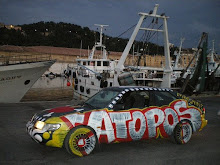
Fran ATopos in European TourLe MaraisEntréeLaurentiu StoicaPietracatellaPalazzo Nuovo
SardegnaDietro le quinteFrom the topPoco prima (o dopo?) del Frozen torineseSardiniaATopos in the balcans
Fontana allucinanteSan SimplicioTavolara PORTUGAL E PIEMONTE - TRIPDal Castello di Noarna verso BrancolinoPlaza de Espana, Sevilla

Traveling, a set on Flickr.

some of my best shots while traveling

7 set 2011

Stairway to park

Stairway to park by fran_atopos
Stairway to park, a photo by fran_atopos on Flickr.

new pictures in Ancona, Marche, Italy. My hometown =)

30 ago 2011

Inside Mexico's mud-hut mosque - Features - Al Jazeera English

Inside Mexico's mud-hut mosque - Features - Al Jazeera English
visit a Mosque in Chiapas!

the Italian Tour: TIRED OF THE CRISIS? GO LIVE IN CALASCIO OR ON GRA...

the Italian Tour: TIRED OF THE CRISIS? GO LIVE IN CALASCIO OR ON GRA...: It's a chance we made it up to Rocca di Calascio. I had met some time before 2 people from Calascio, where they grow bio-food and live in r...

24 ago 2011

the Italian Tour: VENICE - THE MUST OF ANY TOURIST IN ITALY

the Italian Tour: VENICE - THE MUST OF ANY TOURIST IN ITALY: Ok, I'm not crazy about suggesting you what you already know: Venice is unique, impossible to miss, a real must for anybody. When you do ...

I Bonzi

I Bonzi by fran_atopos
I Bonzi, a photo by fran_atopos on Flickr.

pictures from Spazio Sofà, teatro San Marcello

22 ago 2011

Eyes

Eyes by fran_atopos
Eyes, a photo by fran_atopos on Flickr.

my son, Adamo!! =)

3 ago 2011

PPsssh

PPsssh by fran_atopos
PPsssh, a photo by fran_atopos on Flickr.

Ecce Adamo!

27 lug 2011

EUROPE WAS FASCIST LONG BEFORE YOU

The madness of this norwegian killer whose name will NOT be remembered here, reminds me of something else. About 100 years ago, many political parties were active in Europe: the socialists, the anarchists, the communists, the fascists..

Are we ready to deal with them? Rom kids in Shutka, Macedonia

I want to speak about the latter ones. Respected and dignified countries such as Great Britain and France were at that time quite easy going with the daring machism of countries like Italy, which in 1911 invaded Libya and took it from the Ottoman Empire. Great Britain and France were ok with it. Later on, much later ok, but it proves the point, the Reich of Hitler conquers Austria and then it invades Poland. Great Britain and France were ok with it. They called it "appeasement".
The truth is, as it was largely shown also by academics in the recent years, that many European countries actually appreciated and encouraged fascisms, in opposition to bolsheviks, which by then, in 1917, had made "communism" a real enemy. That's how italian fascism and german nazism got to power, by using first the label "socialism" and then switching to a nationalist, racist, exoteric root.
After a war and a few genocides around the world, the European Union has become the symbol of the highest standard of democracy in the world (is it?). Thanks to the great hope it has sparked in eastern European countries, the EU can now say "we stand for democracy and human rights".

Afghan kids in Patras, Greece

It might sound weird that a country like Norway has decided to be outside of the EU, but in any case, it doesn't seem strange to me that somebody out there is actually planning to go back to the real European spirit, the one that has made us build up the European Fortress itself.
Since the time of Delors, great politician behind the empowering of the EU, this very peculiar confederation of States has set itself the goal to be better than the rest, therefore following the path of positivism, eurocentrism and an invisible will to dominate, with the good, or with the bad manners.
Charles is from Sudan and he wants to seek asylum in the UK
On one side we have a Europe which strives to be politically correct, acknowledging rights to Rom or to gay people, on the other hand we have a Europe that cannot stand being confronted by lesser nationalities. Among the latter, we can find awful European Parliament member Mario Borghezio, who recently stated how the ideas behind the Norway massacres are "100% good".
It's up to us to decide whether to be facing the crisis with poorer people coming at our doors, or shoot at them in the face as soon as they approach the borders of our countries. Eventually, the hatred speeches, racism on any level will bring to that point. Or else, we can avoid choosing at all, making it much easier for both -the desperate and the racist - to fight each other while we think our views are just too unique to be summed up in a geopolitical struggle. 
Europe was born after great tragedies, do we need new ones in order to create a better union, or shall we learn history and do our best in order to avoid a very near disaster?

Atopos in the Balkans, PRIMA TAPPA

23 lug 2011

desert

desert by fran_atopos
desert, a photo by fran_atopos on Flickr.

desert picture I took in Acacus, Libya

11 lug 2011

0 the 1: Adamo is born

my babyyyyy
0 the 1: Adamo is born: "Towards the last week of June, I've been having contractions by the day. Fra had several exams to complete in University then and was asking..."

27 giu 2011

Ongoing protests for democracy and free media in Macedonia - European Journalism Centre

My article on European Journalism Centre about protests in Macedonia after the death of Martin Neshkoski. Ongoing protests for democracy and free media in Macedonia - European Journalism Centre

8 giu 2011

Referendum in Italy, is Berlusconi losing again? (Text) - Youthmedia Europe

Referendum in Italy, is Berlusconi losing again? (Text) - Youthmedia Europe
an article on upcoming referendum in Italy, by italian journalist Francesco Conte. Originally published by European Journalism Centre magazine.

2 giu 2011

LA MORTE DI BIN LADEN (lacrime di coccodrillo)

È sempre una notizia quando un ricco muore, tanto che i giornali hanno già la biografia pronta dei notabili del villaggio (globale), ma stavolta il nome in questione ha forse preso alla sprovvista pure gli stakanovisti di wikipedia. Osama Bin Laden deve la sua fama alla famiglia da cui proviene ma di certo ha avuto modo di distinguersi in vita per una certa scellerata originalità che l’ha portato a essere il nemico numero 1 degli Stati Uniti e causa della “guerra al terrore” degli ultimi 10 anni. Di origine sunnita, la famiglia Bin Laden è riuscita a mimetizzarsi nel grigio mondo degli affari cui anche il colonnello Gheddafi – suo acerrimo nemico - appartiene. Come un novello Saladino, Osama ha voluto difendere l’Islam dall’affronto degli infedeli invasori, ma invece che i Templari, stavolta c’era da attaccare prima i traditori in terra araba e poi tutti indistintamente in nome del terrorismo internazionale e della sua “Gerusalemme liberata”. Bin Laden ha dichiarato guerra a un certo Islam in nome del vero Islam, ma ha anche combattuto contro il grande mostro americano dal suo interno, con il potere dei soldi e l’immunità del milionario. Al Dio di tutti americano, Osama ha opposto l’Allah dei “veri” musulmani, incitando alla rivolta i mullah e gli imam di mezzo mondo, in vista di un Islam d’avanguardia con il quale annientare il collaborazionismo arabo con gli occidentali.Strano che Bin Laden scompaia proprio all’indomani delle grandi rivolte arabe in cui spesso il fantasma di Al Qaeda viene evocato. E mentre cadevano prima Mubarak e poi (forse) Gheddafi, Osama stava pensando a una nuova offensiva in terra d’Africa a suon di jihad e capitale. Con il business infatti, il clan Bin Laden ha armato Al Qaeda da una parte e iniziative filantropiche come la Benevolence International Foundation da un’altra, creata per mano di suo cognato Mohammed Kalifa, di Gedda. Come nell’araldica medievale europea, ogni signore della dinastia Bin Laden ha la sua provenienza nel cognome che porta, ma se Riccardo Cuor di Leone volle Gerusalemme cristiana (e non vi riuscì), Osama Bin Laden portò la guerra in bocca al paese più grande del mondo. Gli Usa, che da allora non poterono fare a meno di attaccare, fino a quando un presidente nero, di nome Barack Hussein Obama, invece di esibire con orgoglio la foto trionfale della morte del nemico, preferì mostrare un vecchio con la barba tinta di nero. Così si conclude “Morte a Abbottabad”, dove pure il nome del paese ha il segno del nemico, il capitano inglese James Abbott, che lì partecipò all’accordo coloniale tra russi e britannici per spartirsi Tibet, Afghanistan e Persia.

26 mag 2011

Francesco Conte on Vimeo by Fran Atopos Conte

videoreel made by Katerina Bonvora

10 mag 2011

GLI ARABI E L'ISLAM, DI FEDERICO ARBORIO MELLA


Se uno dovesse dar retta alle teorie post 11 settembre, ad Al Qaeda da una parte e allo scontro delle civilizzazioni dall’altra, dovremmo probabilmente dimenticare capolavori come Battaglia ad Algeri, di Gillo Pontecorvo, oppure relegare alle cassetto delle buone intenzione un libro come “Gli Arabi e l’Islam”, di Federico Arborio Mella. Pubblicato da Mursia nel 1981, “Gli Arabi e l’Islam” è un piccolo capolavoro che ripercorre 1000 anni di storia con la sapiente passione di uno storico antico. Da Maometto ai Mongoli, passando per Romani, Persiani, Berberi, Normanni e Visigoti, il libro di Arborio Mella è un compendio prezioso per chiunque voglia capire l’anima araba, ma soprattutto l’arrivo della civilizzazione sotto forma di Islam. Baghdad, Cairo, Palmira, Kabul, Bukhara, Damasco, Gerusalemme o San Giovanni d’Acri, innumerevoli sono i luoghi ricordati lungo la narrazione, che dalle prime dinastie di Medina e Mecca arriva fino all’invasione di Gengis Khan e al suo breve e anomalo sultanato che non s’occupò mai di religione.
Gli Arabi e l’Islam però tiene fede al suo titolo dando ampia importanza ai personaggi musulmani che più caratterizzano la storia araba e le sue molteplici declinazioni. Dall’imam nascosto della tradizione sciita fino a Saladino, la storia d’Islam è fitta di intrighi e vicende poco conosciute come quelle della setta degli Assassini, dall’arabo “hashashiyun”, “coloro che assumono l’hashish”, il cui maggior colpo terroristico ante litteram fu niente meno che l’uccisione del visir persiano Nizam al-Mulk, tutore del sultano Malikshah nonché autore di un celebre trattato sull’arte e la scienza di governare e fondatore di università di scienze politiche e teologiche, di cui la più celebre quella di Baghdad, nel 1067, ben prima delle università europee.
Alla luce degli avvenimenti odierni, il libro di Mella è utile per una migliore comprensione della complessità dietro al termine “religione”. Sunniti, Sciiti, ma anche decine di staterelli, sette e predicatori videro la luce in terra d’Islam, mai del tutto cementata dalla religione comune, soprattutto in base alla dominanza dell’etnia araba su quelle africane o asiatiche. Sin dai tempi di Maometto inoltre, i vicini che gli arabi avrebbero dovuto affrontare con sempre maggiore difficoltà erano i cristiani da una parte, eredi dell’impero romano, e i persiani dall’altra, poi accomunati sotto il nome di Allah, con l’esclusione degli ebrei che per secoli saranno una presenza sui generisin tutta la penisola arabica. Se la religione non poteva accomunare tutti i popoli di territori tanto vasti, doveva farlo la politica, in una difficile sintesi tra mondo iranico e arabo, tanto che la stessa capitale dell’impero si spostò con le sue dinastie più influenti: dalla Medina di Maometto alla Mecca dei Quraysh, l’Islam nacque come religione nomade e “imperialistica”, che voleva portare ordine tra le agguerrite tribù di Arabia e Medio Oriente. Se la Mecca rimase sempre la capitale spirituale, il centro politico si trovò presto a Baghdad, e da lì passò in Egitto prima e infine addirittura in Spagna. La distinzione tra potere politico e religioso si gioca insomma su un filo sottile e tagliente, dove il carisma personale va di pari passo con la fortuna degli eventi. È il caso di Gia’far, brillante capo della Baghdad dei primi anni del nono secolo fino alla sua caduta in disgrazia e decapitazione, che lo rese leggendario in una novella delle Mille e una Notte.
È un mondo antico quello che racconta Mella, ma che dimostra la sorprendente ampia superiorità culturale del primo mondo islamico sul tardo medioevo europeo alla luce di personalità straordinarie come Al Ghazzali o Avicenna. Medici, chimici, grammatici, cantori e ovviamente poeti resero le capitali della Mesopotamia e dell’Egitto il centro più avanzato del mondo conosciuto, fino all’incontro (per corrispondenza) simbolo dell’epoca, tra il califfo Harun ar-Rashid e il re cristiano Carlo Magno, erudito e raffinato il primo, prode soldato, ma analfabeta il secondo.
Per gli italiani poi il libro assume un significato speciale anche per la presenza di un interessante – e inevitabile – excursus sulla Sicilia. Sarà infine Federico II, che proprio in Sicilia aveva imparato a rispettare l’Islam, a trovare, secoli dopo, uno speciale accordo sulla visita dei pellegrini cristiani a Gerusalemme, prima di una nuova ricaduta nelle ostilità tra Europa e Arabia. Particolarmente gustosi sono a questo riguardo i capitoli che riguardano le crociate, dalla prima, una vera e propria emigrazione in massa da parte dei più poveri e derelitti su indicazione della chiesa di Roma, fino alle crociate di nobili e notabili europei: Normanni, Franchi, Templari, fino a un altro incontro che avrebbe lasciato il segno, quello tra Saladino e Riccardo Cuor di Leone, che riuscì a vincere sul primo per poi accapigliarsi con Austriaci e Tedeschi. È un’altra però la nazionalità che desta più curiosità, quella dei Turchi, nemici dell’Islam prima in quanto Impero romano d’Oriente, e poi lentamente assimilati, ma non del tutto. Sono di origine turca persino gli Uighur, l’unica popolazione musulmana di Cina, e pur essendo periferici al califfato, i Turchi ebbero modo di prendere il controllo politico grazie alla loro fama come corpo militare. E se questo non bastasse a invogliare a leggere questo testo, provate a immaginare i primi discendenti di una casa reale europea, figli del visigoto Roderico di Spagna, deportati al cospetto del califfo di Baghdad, che non aveva mai visto prima d’ora degli uomini biondi.